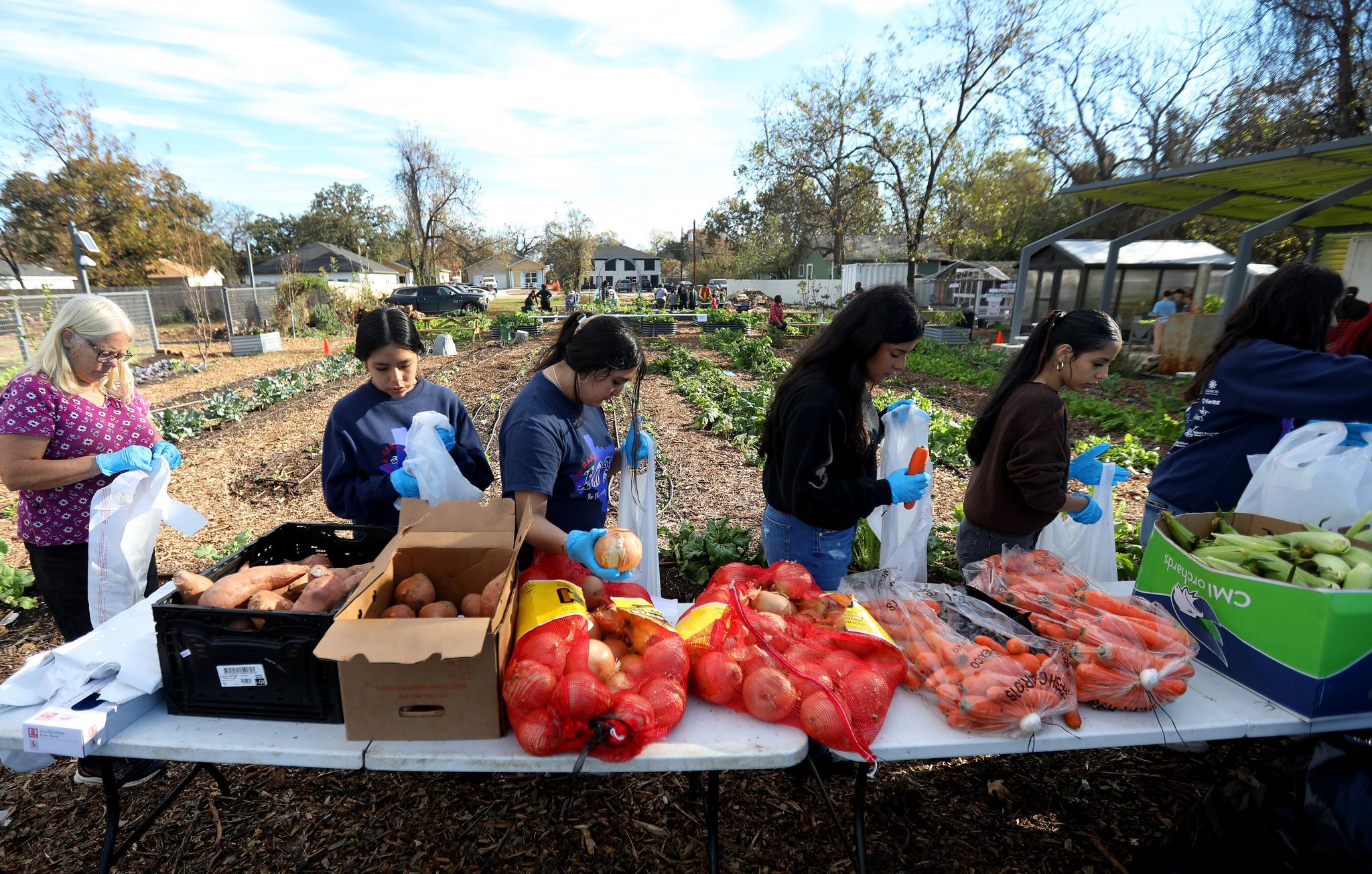
To strengthen North Texas’ food system, Dallas group turns to healthcare solution

A Dallas community-led initiative is working to expand healthcare access for food workers as part of an effort to bolster long-term stability in North Texas’ food system.
Workers are keeping the food system afloat, so they should be supported, said leaders from the Dallas–Dallas County Food Collaborative and health subscription company Arete Health.
“Food systems don’t function without the people behind them,” said Whitney Strauss, chair of the collaborative, in a statement. The collective launched last year, with hundreds of organizations working to connect North Texas’ vast food network as the region faces a growing population and rising food insecurity.
Related: Amid booming growth and increasing hunger, does Dallas need a plan for its food system?
Arete Health, a local company, launched in 2024 “on the premise that healthcare is too expensive,” said Byron Sanders, its CEO and founder. Having previously led nonprofit Big Thought and as a Dallas ISD trustee, Sanders said he sees how partnering with the collaborative could help address long-term and wide-reaching effects of food insecurity.
“These ecosystems are all connected,” Sanders said. “If we take care of the people who take care of the people, then the people broadly are going to be better off.”
As part of the partnership, Arete is offering health services for a $65 monthly subscription, rather than a traditional insurance model, for food workers. The membership offers a package of primary care, urgent care, dental, vision and other services. There are no deductibles or copays for its core services. Sanders is hoping this will make a dent in improving the community’s health.
Related: Southern Dallas grapples with health disparities in new Dallas County report with Parkland
Dallas has seen its hunger grow in recent years. Food insecurity rates are higher in Dallas County than at the national level. The southern half of the county experiences the larger share of hunger, and south of Interstate 30, life expectancy is about 17 years shorter for some residents when compared with those to the north, according to a county analysis.
Across North Texas, the rate of uninsured residents is much higher than the national average of 9.5%. In Dallas County, that number is worse than the statewide figure.
A number of socioeconomic factors — not just food access — are tied to gaps in health. Areas with lower life expectancies tend to also face issues with access to healthcare, transportation and basic infrastructure. Strauss and Sanders are among several community leaders and organizations looking to improve quality of life in the area.
Related: Dallas City Council members hear widespread plan to bolster Dallas area’s food system
Sanders called Arete Health a “revolutionary” solution to provide healthcare to part-time workers and others with less access. The food collaborative, meanwhile, is focused on a big-picture plan. Together, they’re hoping to make meaningful change.
“If we can support this group of doers, then it creates the capacity for them to really be more full steam ahead on creating the kind of ecosystem that can eliminate these food deserts,” Sanders said.
This reporting is part of the Future of North Texas, a community-funded journalism initiative supported by the Commit Partnership, Communities Foundation of Texas, The Dallas Foundation, the Dallas Mavericks, the Dallas Regional Chamber, Deedie Rose, Lisa and Charles Siegel, the McCune-Losinger Family Fund, The Meadows Foundation, the Perot Foundation, the United Way of Metropolitan Dallas and the University of Texas at Dallas. The News retains full editorial control of this coverage.
Read more Judge reinstates longtime North Texas transportation chief Michael Morris