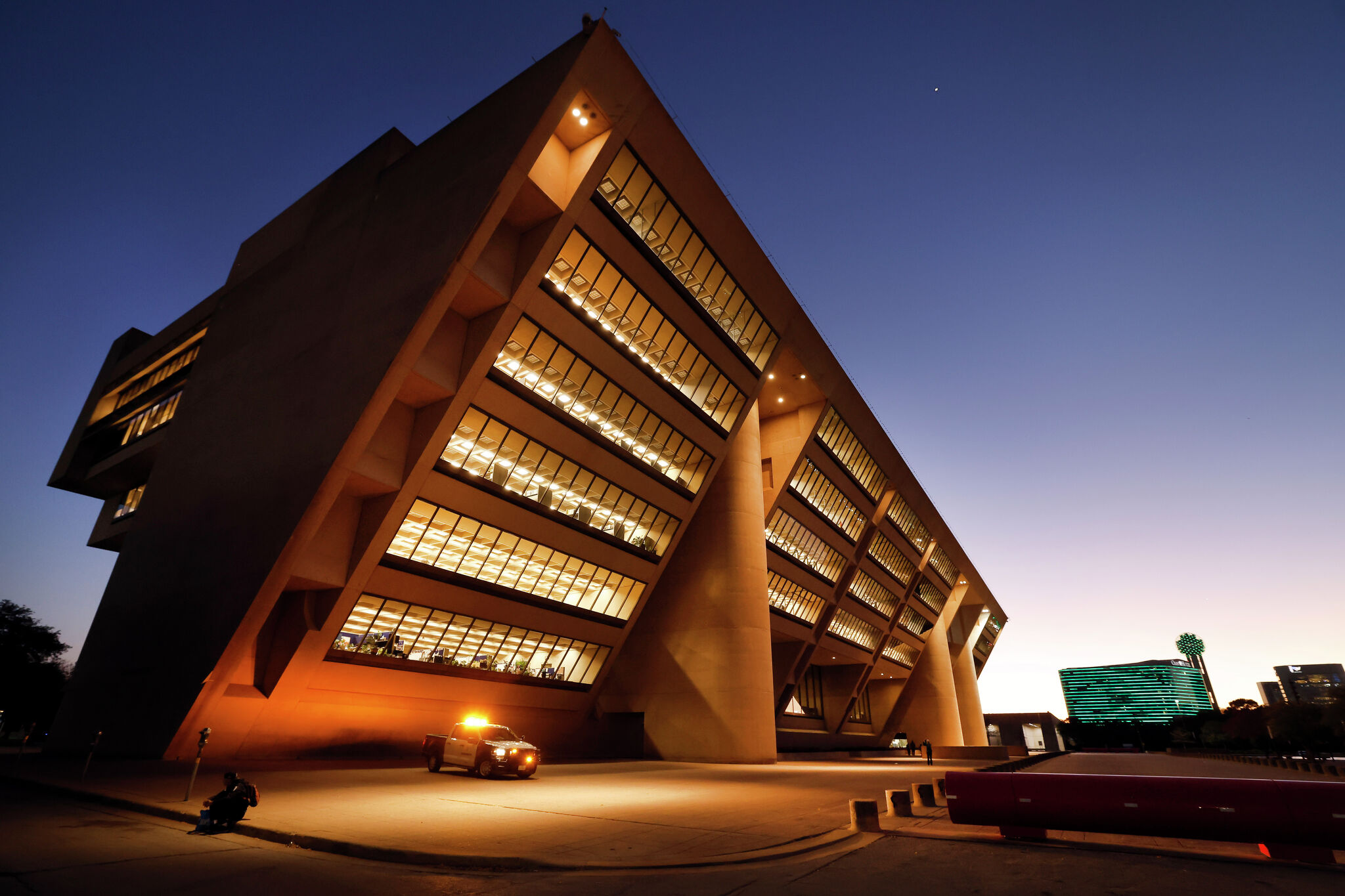
Dallas council members eye possible staffing cuts at City Hall to address budget woes
Reducing Dallas City Hall’s workforce was on top of mind Wednesday for several council members as the city begins crafting its next budget.
Payroll makes up 72% of the city’s budget, including costs related to salaries, overtime, health benefits and pensions. Several council members debated the trade-offs, and whether the cuts could be made without affecting the city’s services.
“How much efficiency are we getting with cutting headcount before we can say we’ve cut too much and we now need to do something different?” council member Lorie Blair asked.
City Manager Kimberly Bizor Tolbert said the city had been combing through department spending to eliminate vacant positions from its books since 2024. That process has saved the city $21 million in the last two years. But now, she said, the city will need to look at staffing models.
The models include asking, does the city need 10 office assistants? Can five coordinators deliver that work?
Tolbert said the city wanted to make sure loss in staffing cuts didn’t translate into there not being a person who could perform the services residents rely on.
“But I can’t tell you that there will not be cuts. I can’t say that,” Tolbert said.
On Wednesday, the city’s top financial officers said the city is short $18 million or less than a percent of the revenue it expected to cover expenses in the next budget. Sales and property tax collections are growing but are not keeping pace with spending, reflecting growing financial pressures other municipalities are facing across the U.S.
That’s on top of a multi-million-dollar deficit the city’s navigating halfway through its current budget.
Jack Ireland, the city’s chief financial officer, said the city’s added more than 900 employees to the workforce in the past eight years. A bulk of those joined the police and fire departments, he said.
Other council members trained their attention on other line item expenses. Council member Chad West asked if the city had considered a fee or a tax on vacant land as a revenue stream, and council member Laura Cadena asked if the city was developing a metrics for all its real estate it hopes to sell to bolster its books.
Council member Maxie Johnson, who chairs the council’s Government Efficiency Committee, questioned why the city was spending $8.5 million to fund a school crossing guard program when it appeared to be better suited for the Dallas Independent School District.
Tolbert said a state law mandates that cities with more than a million residents are required to offer crossing guards in partnership with local students to ensure students’ safety.
Officials will work over the summer and are expected to present the new budget in August.
Read more A new generation of tour guides prepare to tell Dallas’ story to global FIFA audience