A North Texas workforce program changed her life. Now it’s getting $6 million to help others
Elizabeth Henry can finally reach work without worrying whether an Uber cancellation, a late bus or a friend’s empty gas tank will cost her a shift or her job.
Read more Sen. John Cornyn has sharp Mother’s Day message for Attorney General Ken Paxton in GOP runoff

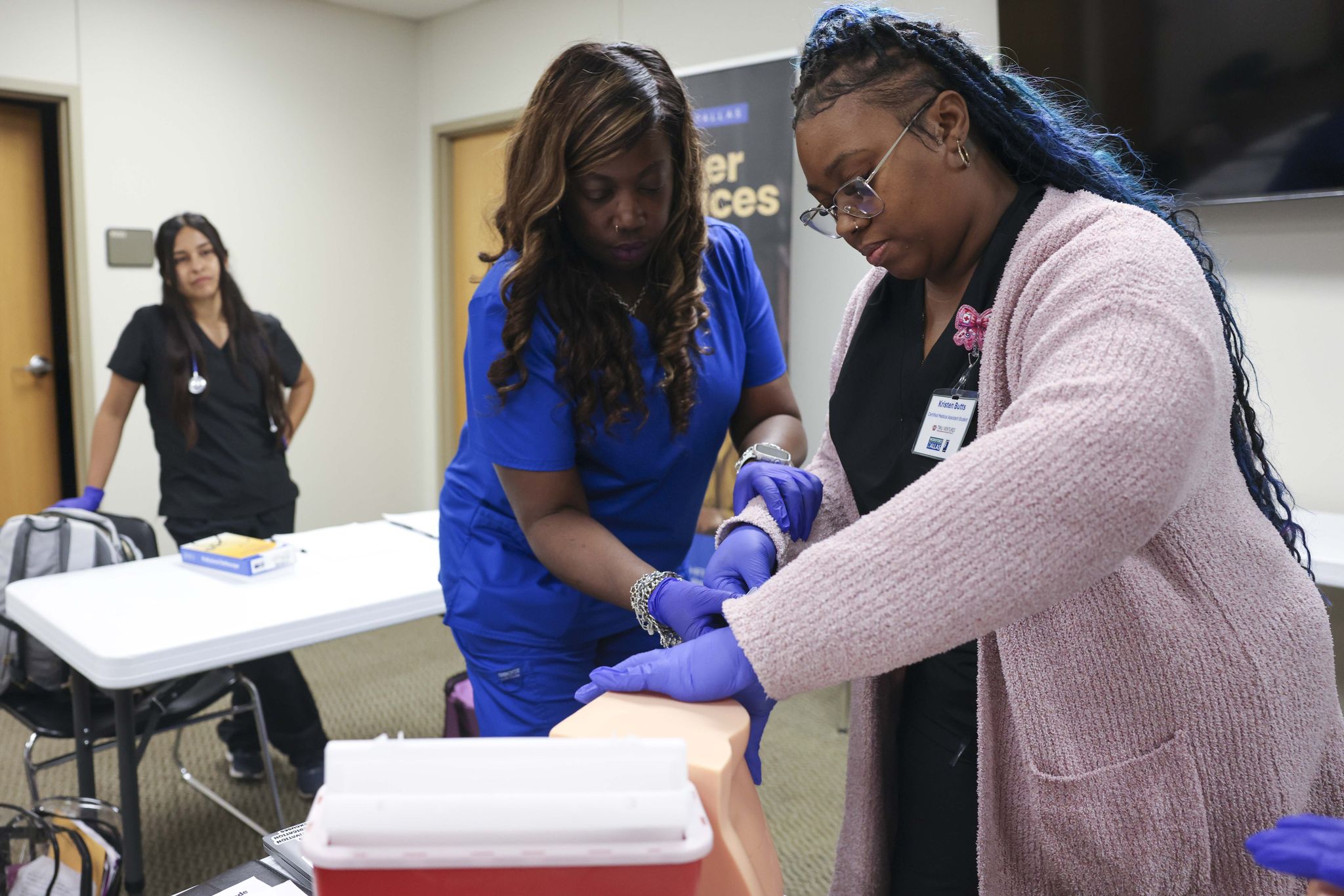
That path opened at a Dallas food pantry, where she was steered into a United Way of Metropolitan Dallas workforce training program. The Pathways to Work phlebotomy course at Dallas College helped cover food, uniforms and transportation so she could focus on learning.
“I don’t have a lot of family here, so it’s like they became my new support system,” she said. “If you want it, you’ve got to go get it and let nothing change your mind from that.”
United Way hopes to replicate Henry’s experience for thousands of North Texans as Vistra and Fifth Third Bank commit $6 million to expand Pathways to Work to connect graduates of training programs to jobs. (United Way is a supporter of the Future of North Texas initiative at The Dallas Morning News.)
North Texas faces a growing mismatch in its labor market. While the Dallas-Fort Worth area continues to lead large U.S. metros in job creation, demand for skilled workers is outpacing supply. A Boston Consulting Group analysis projects a shortfall of more than 20,000 workers in living-wage, non-college roles by 2030, even as many residents remain underemployed.
Workforce experts say those gaps are often concentrated in fields like healthcare, skilled trades and logistics, where many jobs do not require four-year degrees but can offer stable wages.
Don’t let Google decide who you trust.
Vistra and Fifth Third Bank’s money will help scale “Pledge to Pathways,” a new effort urging employers to commit not just dollars, but actual interview slots and hiring pipelines for graduates of Pathways to Work training programs.
“By taking the Pledge to Pathways, business leaders across our region are stepping up to connect people to good jobs that provide stability, dignity, and real career pathways,” said Jennifer Sampson, who recently stepped down as United Way’s McDermott‑Templeton president and CEO to lead The Stephens Greth Foundation.
Pathways to Work, launched about a decade ago, offers industry recognized training and credentials in high‑demand fields such as healthcare, information technology, construction, logistics, advanced manufacturing, business and finance. Participants can access adult education, GED and ESL classes, digital skills, work‑based learning, career coaching, and childcare and transportation assistance.
The program placed about 5,000 North Texans into better-paying jobs last year, with average wage increases of about 40%, according to United Way. Jim Burke, CEO of Irving-based Vistra and United Way’s annual campaign chair, said he wants to triple that to 15,000 placements a year as funding and employer commitments grow.
“If all these employers are here, and some want to come to Texas, well, they can only come and be successful here if there’s a trained and available workforce,” he said.
Texas Workforce Commission projections show that up to a million skilled‑trade and similar jobs could open statewide by 2035, Burke said. Many do not require a four‑year degree and can grow into six‑figure careers within a few years of high school.
Related: AI is making it harder to land entry‑level jobs, Dallas Fed report finds
However, many workers fall through the cracks between classroom and career because “hiring and placement is not easy,” he said.
Pledge to Pathways is meant to tighten that link. Employers who sign on agree to share upcoming job needs, help shape curricula with training partners, and actively consider graduates for open roles.
United Way also wants to build a technology hub that connects recruits, training programs and hiring employers in real time. That means workers can see which courses exist, while companies are prepared to hire on the other side.
The initiative’s impact is evident for Henry, who moved to North Texas years ago after a traumatic car crash in Detroit left her on disability and unsure if she would walk or use her hands again. Since then, thanks to Pathways to Work, the 45-year-old has a steady, higher paying job and has purchased a used 2015 Buick Enclave to get around the region.
Now working as a plasma center phlebotomist, she hopes more employers will join United Way’s pledge to give trainees the first shot she needed.

Catch up on the latest news and top stories from across North Texas, with updates in the morning and evening.
By signing up, you agree to our Terms Of Use and acknowledge that your information will be used as described in our Privacy Policy.
“Show a little bit more leniency,” Henry said. “A lot of places want you to already have a year’s worth of experience. If I just graduated, how am I going to possibly have a year’s worth of experience if nobody wants to give me a chance?”
The $6 million, and future campaign support from companies, could turn more of those first chances into lasting careers.
This reporting is part of the Future of North Texas, a community-funded journalism initiative supported by the Commit Partnership, Communities Foundation of Texas, The Dallas Foundation, the Dallas Mavericks, the Dallas Regional Chamber, Deedie Rose, Lisa and Charles Siegel, the McCune-Losinger Family Fund, The Meadows Foundation, the Perot Foundation, the United Way of Metropolitan Dallas and the University of Texas at Dallas. The News retains full editorial control of this coverage.
Read more Dallas parks could close rec centers, cut summer camps under proposed $14 million trim